Why We Built This for Brake Pads
Let’s get real: brake pads are tough. The tolerances are brutal, and there’s no wiggle room. You need to bond the friction material to the backplate fast—fast enough to keep the line moving—but not so fast that you warp the part or lock in stress. That’s exactly why we built our infrared heaters around halogen lamps. They deliver the kind of precise, controlled heat profile that keeps every part coming out the same.
The Power Behind the Heat
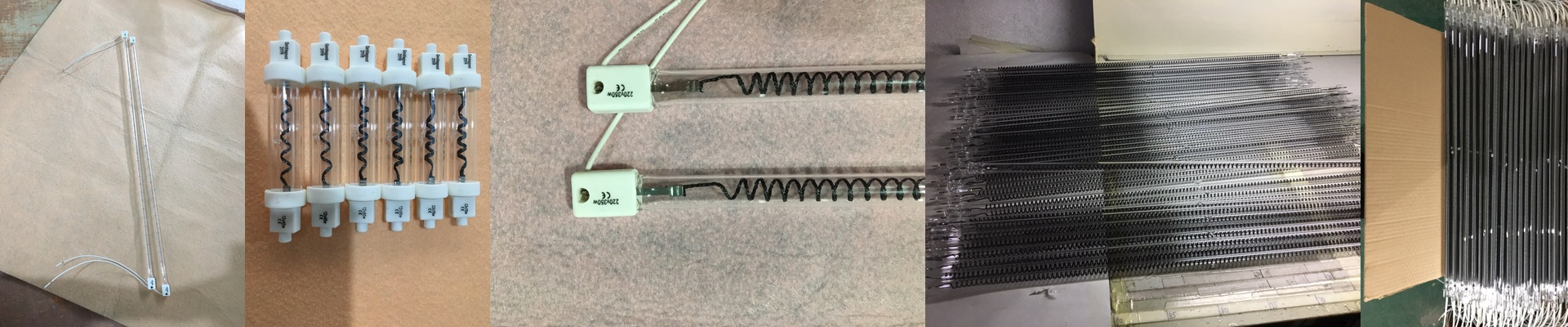
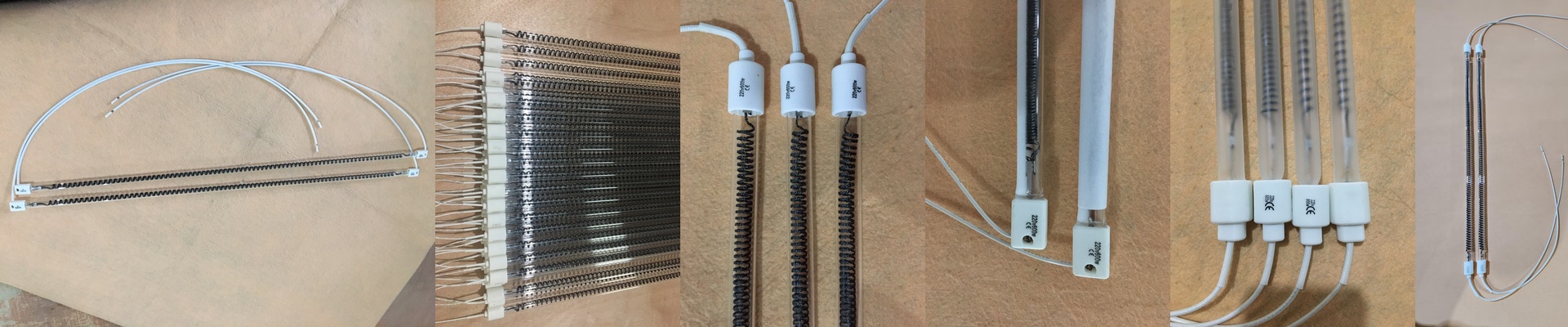
Here’s the thing about infrared: it doesn’t just heat the surface. It gets right into the material, heating it from the inside out. That cuts cycle time way down compared to older convection methods. We run our halogen tubes at high voltage—usually 400V—because it packs a lot of wattage into a small space. A 2500W tube in a 300mm length gives you serious heat density, so the temperature ramps up fast. Perfect when you’re running high volume. But there’s a trade-off. That kind of power throws off a lot of heat. So the fixtures and reflectors around the lamp have to be up to the job. We engineer the machine to keep everything cool and isolated, so you get the speed without the chaos.
The Details That Make It Work
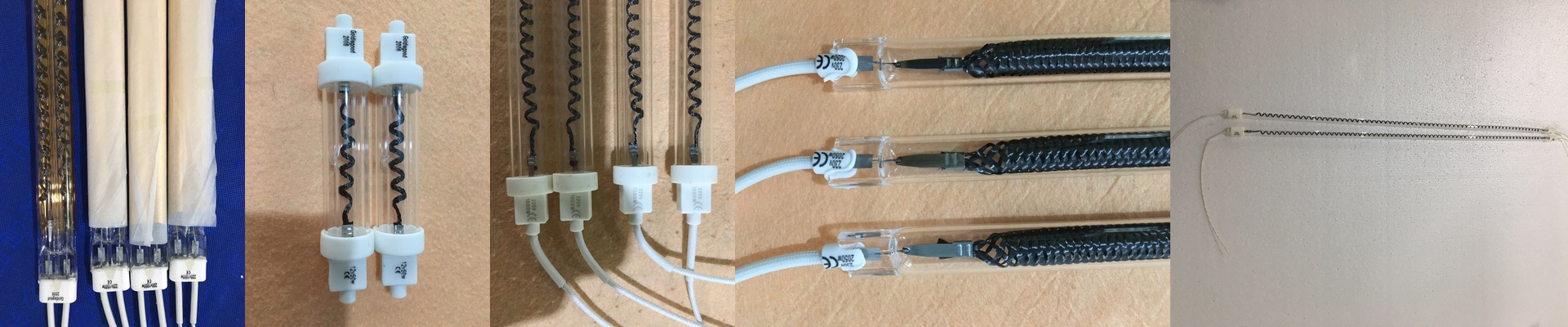
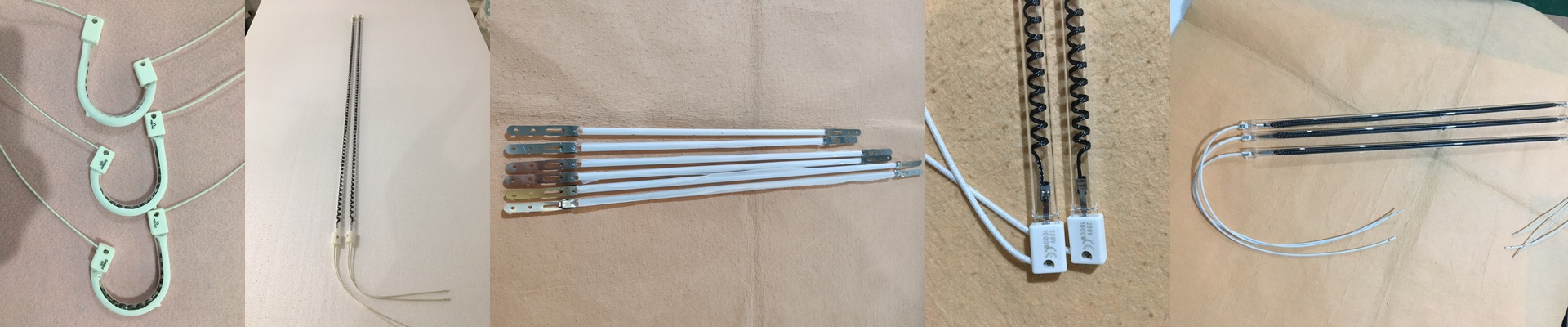
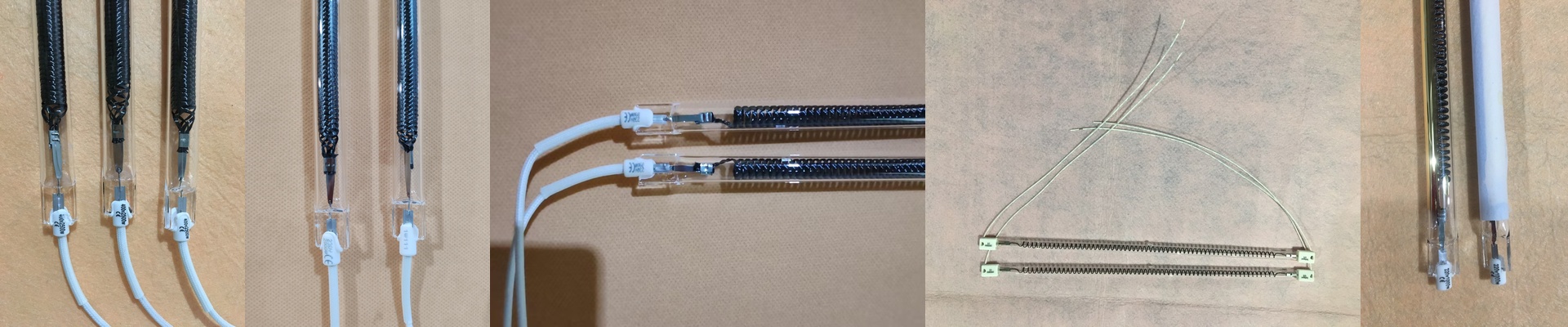
The lamps themselves live inside a quartz envelope. Why? Quartz handles rapid heating and cooling cycles without cracking, and it lets shortwave IR pass through cleanly. We also add a reflective coating to the lamp. It directs more energy straight down onto the part, so less heat goes to waste and more goes where you need it. And then there’s the connector. In production, the details matter. We use an R7s base because it’s a proven industrial standard—easy to wire, mechanically solid, and designed for the reality of lamp changes. If your fixture needs something different, we can spec SK15 terminals too, so you get a drop-in fit without redesigning the whole heating module.
The Payoff: Less Stress, Tighter Control
Brake pads are made of layers that expand and contract at different rates. If the heat isn’t even, you get internal stress. That stress shows up as spring-back and parts that drift out of spec. With our infrared heaters, you can run zone control—each lamp gets its own temperature. That flattens the thermal profile across the pad, so you don’t get hot spots and cold spots. What does that feel like on the line? Consistent bonding. Fewer rejects from warping. And a process you can trust from the first part to the ten-thousandth, without chasing size drift.